
Hoping to manage your time better? Seeking to become more productive? Here’s a trick that might change the way you work.
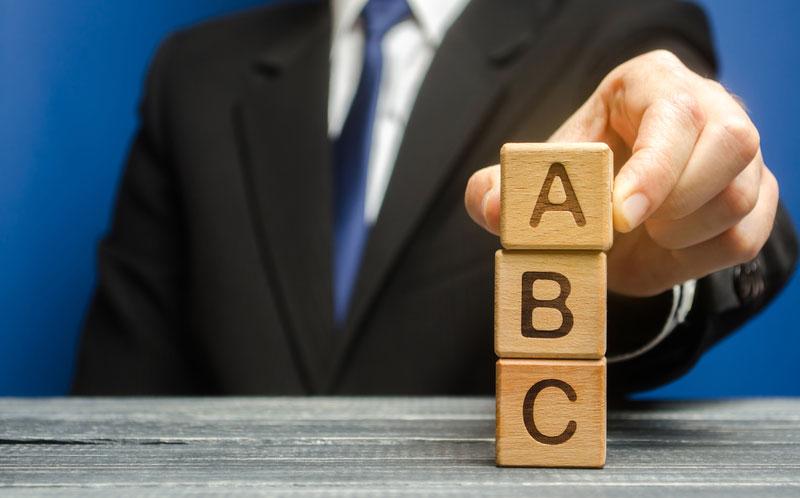
Step one: Grab a pen and paper five minutes before bed and jot down your to-do list for tomorrow. Here’s my system: the must-do tasks go under “A.” The nice-to-get-done-but-not-crucial stuff? That’s “B.” If I power through both A and B, I move on to “C.” And if I’m really on a roll and finish A, B, and C, I tackle “D”—those are the things that aren’t urgent today but will be soon. It’s as if I’m giving my future self a head start.
Step two: The next day, grab your list and complete the tasks one by one in the order you scheduled the night before. Each time you finish something, cross it off or write a checkmark next to it. Trust me, it feels great.
Why bother with all this? For starters, people who plan their day the night before actually sleep better. Studies show your brain keeps working on your list while you snooze, so you wake up more ready to face your day.
And here’s the best part: checking things off your list actually gives you a dopamine hit. That’s the feel-good chemical your brain releases when you accomplish something. As someone phrased it, it’s like a mini high-five from your own body.
So next time you’re wondering how to get more done (and maybe even enjoy it), try this. Your to-do list—and your brain—will thank you.
Mark
Dr. Mark Edge
The WorkEdge Company
Telephone: 903-245-7851
Email: workedgetexas@gmail.com
Website: www.workedgetexas.com
Author of Holy Chaos. To purchase the book, click here: https://www.amazon.com/s?k=mark+edge&crid=3B1BM6W3LHOG0&sprefix=%2Caps%2C137&ref=nb_sb_ss_recent_2_0_recent
WorkEdge leverages AI as a resource. While this material was not written or generated by AI, the editing was informed by AI tools.
For further reading:
Barbara Oakley, A Mind for Numbers
Brian Tracy, Eat That Frog
“Consider it done! Plan making can eliminate the cognitive effects of unfulfilled goals,” https://pubmed.ncbi.nlm.nih.gov/21688924/
“The effects of bedtime writing on difficulty falling asleep,” https://pubmed.ncbi.nlm.nih.gov/29058942
“Paper Notebooks vs. Mobile Devices: Brain Activation Differences During Memory Retrieval,” https://pubmed.ncbi.nlm.nih.gov/33815075/